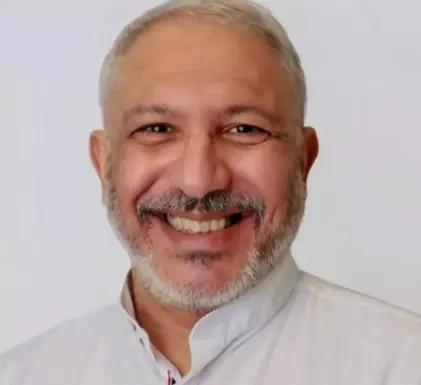
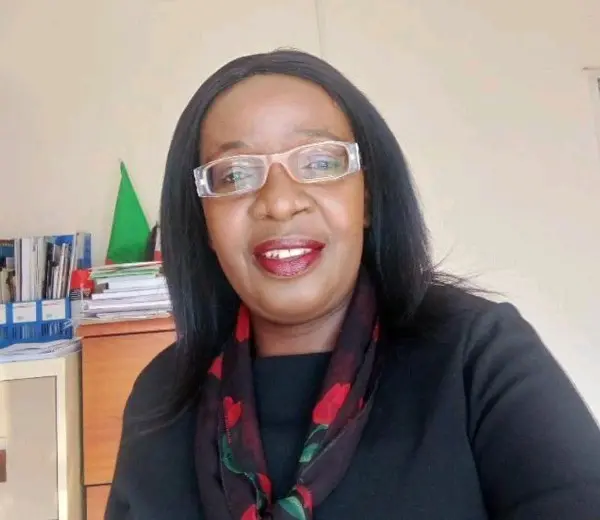
In the latest episode of ‘Keep Travelling: Your African Story’, host Rael Zieve sat down with Diana Yu, publisher of the Just Wanderlust blog, to explore a destination that many travellers still struggle to imagine clearly: Tripoli, Libya. This Tripoli Libya travel guide is not about selling a simple dream. It is about looking past the old headlines and listening to someone who has walked the streets, eaten the food, met the people, and come away with a word that says a lot. Refreshing.
For many people, Libya sits in a difficult corner of the mind. It is a country linked with politics, conflict, and caution. Yet travel often becomes most powerful when it allows a place to speak for itself. Diana’s story does exactly that. She does not pretend Libya is simple. She does not brush over the questions around safety. Instead, she shares a thoughtful view of Tripoli as she found it: structured for visitors, rich with history, deeply Mediterranean, quietly generous, and still untouched by the heavy performance of mass tourism.
This is not the Africa most travellers picture first. There are no safari vehicles moving across golden plains. There are no lodge decks looking over waterholes. Tripoli offers another kind of African journey. It is a city of old walls, sea air, Roman echoes, market sounds, generous meals, and daily life unfolding without much interest in impressing outsiders. That alone makes it rare.
Tripoli Libya Travel Guide: A City That Challenges The Story
Tripoli is often introduced through what people fear, rather than what people may find. Diana understands this well. When she tells people she has travelled to Libya, the first question is nearly always about safety. That reaction is natural. Libya has been through civil conflict, political division, and instability. Even now, official travel advice can change quickly, so travellers should always check current guidance before considering any journey. The UK Foreign, Commonwealth and Development Office currently advises against all travel to parts of Libya and against all but essential travel to other parts, which means professional advice matters before any plan is made.
Still, Diana’s experience adds a more human layer to the picture. Travel to Libya, as she explains it, is highly controlled for visitors. Travellers do not simply arrive, rent a car, and wander off on their own. They travel with a licensed tour company, a guide, and often tourist police support. Depending on nationality, there may also be additional security. For some listeners, that may sound alarming at first. However, Diana saw it differently. To her, it felt like a country trying to build tourism carefully, with structure around guests while the wider system continues to develop.
That distinction matters. A controlled journey is not the same as a carefree holiday, but it can still be meaningful. In fact, it may help travellers understand a country more respectfully. Libya is not a destination for careless box-ticking. It asks for patience, awareness, and the right local support.
Arrival In Tripoli And The First Surprise
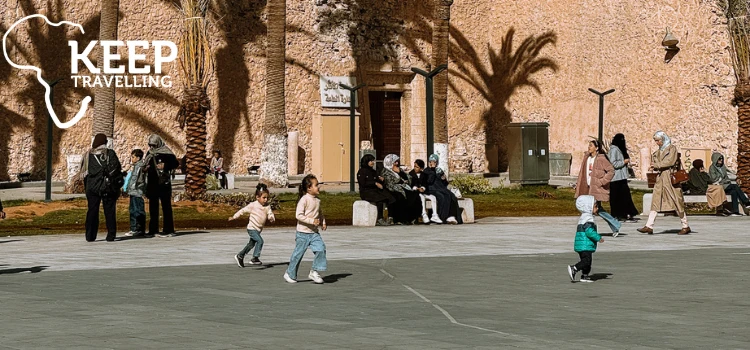
Most visitors who come to western Libya will arrive through Mitiga Airport, close to Tripoli. From there, the city begins to shift expectations. Diana describes a capital that does not match the flat, grey image many outsiders may hold in their minds. Instead, there are palm-lined streets, wide boulevards, Mediterranean light, and the blue shimmer of the sea.
That image alone changes the mood. Tripoli is not a desert outpost standing apart from the world. It is a coastal city with layers of African, Arab, Ottoman, Roman, Italian, and Mediterranean influence. This mix gives the city its strange beauty. You can feel the weight of history, but you can also see families moving through public squares, children playing, and locals going about ordinary life.
There is something powerful in that ordinary life. Travellers often arrive in complicated countries looking for signs that confirm what they already believe. Diana seemed more interested in what did not fit the story. She noticed calm. She noticed space. She noticed that people were not pushing, selling, or chasing visitors. In a world where many famous destinations have learned to perform for tourists, Tripoli felt different. It felt like itself.
The Medina, The Red Castle, And A Living Old Town
One of the strongest parts of Diana’s Tripoli Libya travel guide is her description of the old city. The medina is not presented as a polished attraction. It is not a stage set. It is a living area where daily routines continue, whether a traveller is watching or not.
The city’s large pedestrian square leads into narrow old-town lanes, where small glimpses of life appear around each corner. There are vendors working with copper. There are bread sellers, cafés, and shopkeepers. There are old buildings with stories held quietly in their walls. Nearby stands the Red Castle, one of Tripoli’s most recognised landmarks and a place tied to the city’s long and complicated history.
For Diana, the beauty of the medina was its lack of performance. Many travellers know the feeling of walking through an old town where every corner has been shaped around what visitors want to buy, photograph, or post. Tripoli is not like that. Because there are not many tourists, the city has not yet been softened into a souvenir version of itself.
That does not make it easier. It makes it more real. Libya cultural travel is not about ticking off neat highlights. It is about letting the layers sit together: beauty and damage, welcome and caution, history and uncertainty, all in one place.

Respect, Culture, And Travelling As A Woman
One of the most interesting moments in the conversation comes when Diana speaks about travelling as a woman in Libya. She expected the country’s conservative culture to shape her experience, and it did, but not in the way some people might assume.
She explains that she did not feel harassed or watched in the way women sometimes experience in other destinations. In fact, she felt the opposite. Local men generally did not approach her, did not push conversation, and did not stare. Her guide explained that this behaviour comes from a cultural idea of respect. Men are raised not to initiate conversation with women unless help is needed, and even looking is treated with restraint.
That detail stayed with her. It also stayed with Rael, who brought a little humour into the moment, but underneath the lightness was a serious point. Travel breaks assumptions. Sometimes it does this in loud, dramatic ways. More often, it happens quietly, through small moments that do not fit the story we carried with us.
Diana also noticed that this behaviour was not just directed at foreign women. She saw local women enter shops and receive the same respectful distance. It was not a tourist performance. It seemed to be part of how people interacted.
Food In Tripoli: Seafood, Pasta, And The Shrimp Diana Cannot Forget
Some travel memories fade into a soft blur. Others stay bright because of one meal. For Diana, Libya’s seafood did exactly that.
Tripoli sits along the Mediterranean, and the city’s fish market became one of the standout experiences of her trip. The idea is simple and beautiful. Fishermen bring in the daily catch. Visitors can walk through the market, choose fresh fish or seafood, and then take it to a nearby restaurant where it is cooked on the spot. There is no heavy theatre in this. Just fresh food, heat, salt, smoke, and flavour.
Then came the shrimp. Diana described Libyan shrimp as enormous, almost palm-sized, and more flavourful than anything she had tasted elsewhere. She has visited more than 100 countries, so that is not a small statement. What surprised her most was that the shrimp did not need much seasoning. It carried its own richness.
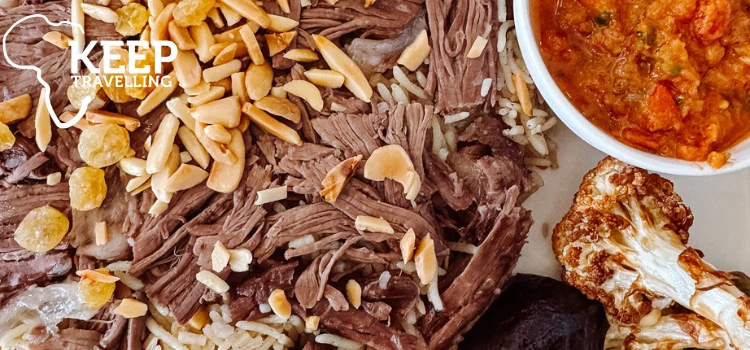
The food story does not stop with seafood. Libya’s Italian colonial past left a mark on the country’s cooking, and Diana spoke about pasta dishes with real affection. She described a dish often called macaroni, closer to penne, served with seafood and a hearty tomato-based sauce. Alongside that, there were lamb dishes, couscous, and North African flavours with a local Libyan twist.
Food can open a country in a way museums cannot. It gives travellers something immediate, warm, and human. In Tripoli, food seems to do exactly that.

Roman Ruins Without The Crowds
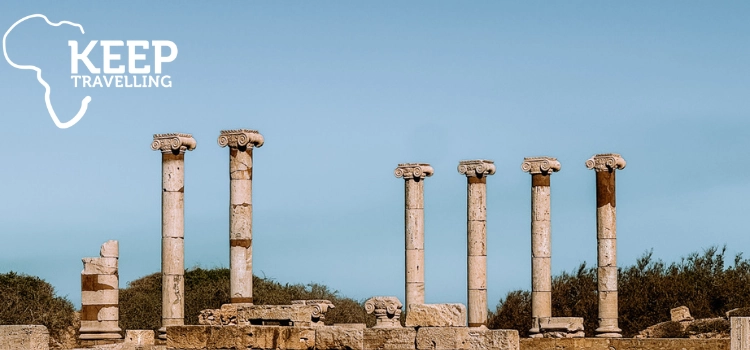
For history lovers, Libya holds something extraordinary. Diana spoke about Leptis Magna and Sabratha, two Roman sites that many travellers know little about, despite their importance and beauty. These are not small ruins with a few scattered stones. They are large, impressive, and deeply atmospheric places that tell the story of Rome’s reach across North Africa.
The difference, of course, is the lack of crowds. In Italy, major Roman ruins often come with queues, barriers, tour groups, and a constant buzz of visitors. In Libya, Diana found ruins where the silence itself became part of the experience. There is something almost impossible about walking through ancient places without being pushed along by mass tourism.
This is where a Tripoli Libya travel guide becomes more than a city guide. Tripoli can be the beginning of a wider journey into Libya’s western heritage. With a few days, travellers may see the capital and then reach archaeological sites that belong among the great historical experiences of the Mediterranean world.
Diana also hinted at Libya’s deeper ancient story beyond the coast. In the Sahara, rock art and stone engravings point to human history stretching back thousands of years. That gives Libya a scale that is hard to hold in one trip. It is not just a country with ruins. It is a land of civilisations layered across desert, coast, and city.
Who Is Tripoli For?
Tripoli is not for every traveller, and that is part of the honesty of this episode. This is not a destination for someone who wants a simple resort escape, full freedom of movement, and a familiar holiday rhythm. It is better suited to people who travel with curiosity and respect.
History lovers will find plenty to hold their attention. The Roman, Greek, Ottoman, Italian, and North African influences create a fascinating cultural mix. Food lovers will also find something to enjoy, especially those who care about fresh seafood and local dishes. Cultural travellers may appreciate the rare chance to see a city that has not yet reshaped itself around outside expectations.
However, this kind of journey needs the right mindset. Travellers must be comfortable with guided movement. They must understand that safety conditions can change. They must listen to local advice and accept that some places may not be available at certain times. In return, they may experience something that feels rare in modern travel: a place not yet smoothed over by global tourism.
For Keep Travelling, this is also an important reminder. African tourism is much bigger than the classic safari dream. Africa can be wild plains and private lodges, yes. But it can also be a Mediterranean capital in North Africa, a Roman theatre under open sky, a quiet medina, a fish market lunch, and a conversation that shifts how we see a country.
The Meaning Of “Refreshing”
When Rael asked Diana to choose one word for her time in Tripoli, she paused. Then she chose “refreshing.” It is a gentle word, but in this context it carries weight.
Refreshing because Tripoli did not match the media picture. Refreshing because people were generous without being performative. Refreshing because the ruins were powerful and quiet. Refreshing because the city had not been built up for tourists. Refreshing because Diana found hospitality where others might only expect tension.
That word may be the heart of the episode. It does not say Libya is easy. It does not pretend the country has no problems. Instead, it says that the truth of a place can be wider than its reputation.
Good travel writing often lives in that space. It does not flatten a country into a slogan. It allows surprise. It allows contradiction. It allows a traveller to say, “This is what I saw, this is what I felt, and it was not what I expected.”
Why Diana Wants To Return
Perhaps the strongest sign of Diana’s experience is that she wants to go back. After visiting more than 100 countries, she is not short of options. Yet Libya left her with unfinished curiosity.
She wants to explore the eastern side of the country, where she spoke of turquoise Mediterranean waters, beaches, Greek ruins, natural landscapes, and waterfalls. She also wants to return to the western desert, where the Sahara stretches towards Algeria and offers another face of Libya entirely.
That desire to return says more than any polished travel brochure could. It shows that the first visit did not close the story. It opened it.
For travellers listening to the episode, that may be the biggest lesson. Some destinations are not fully understood in one visit, one article, or one conversation. Libya is clearly one of them. It is complex, layered, and still emerging as a travel possibility for those with the right support and appetite for something different.
A Different Kind Of African Story
This episode of Keep Travelling: Your African Story stands out because it widens the frame. It reminds us that African travel is not one thing. It is not only safaris, beaches, vineyards, lodges, or wildlife. It is also history, cities, food, faith, coastlines, architecture, and people whose stories rarely reach the travel pages.
Tripoli may not be the obvious choice. In fact, for many travellers, it may not yet be the right choice at all. But Diana Yu’s experience helps us see why the city deserves a more thoughtful place in the African travel conversation.
A good Tripoli Libya travel guide should not ignore the caution. It should not sell fantasy. Yet it should also make room for wonder. It should speak about the medina, the seafood, the Roman ruins, the Mediterranean air, the respect shown to visitors, and the strange pleasure of discovering a city that still feels unedited.
That is what this conversation offers. A glimpse. A careful opening. A reminder that the world is usually more complicated, and more beautiful, than the stories we inherit.
For those who love travel because it teaches, Tripoli offers a powerful thought. Sometimes the most memorable journeys are not the easiest ones. They are the ones that ask us to arrive with humility, listen properly, and leave with a different picture in our heads.
For enquiries about tailored African travel experiences, contact rael@keeptravelling.africa
A few years from now, you will not remember how much it cost you, but you will always remember the memories you made. Keep Travelling.