In the latest episode of ‘Keep Traveling: Your African Story‘, host Rael Zieve sat down with Lindy Sutherland, Marketing Director and one of the family owners of Kariega Game Reserve, to talk about a safari destination shaped as much by its landscape and people as by its wildlife.
Located in South Africa’s Eastern Cape, Kariega combines Big Five game viewing with two rivers, remarkable biodiversity, five very different lodges and easy access to the coast. For travellers already exploring Cape Town and the Garden Route, a Kariega Game Reserve safari can also fit naturally into a wider South African itinerary.
What comes through strongly in Lindy’s conversation with Rael is that Kariega is not simply about arriving, seeing animals and leaving. There are different ways to experience the reserve depending on where you stay, how long you visit and what interests you beyond traditional game drives.
A Natural Addition to the Garden Route
Kariega Game Reserve lies around 14 kilometres inland from the coastal town of Kenton-on-Sea. For international travellers, Lindy explains that a typical journey might begin in Cape Town, continue through the Winelands, Hermanus and the Garden Route, and then include a short flight to Port Elizabeth. From there, the transfer to Kariega takes around one hour and twenty minutes.
That location makes an Eastern Cape safari particularly interesting for travellers who want to combine different parts of South Africa without introducing complicated connections. However, Kariega’s relationship with the coast does not disappear once guests enter the reserve.
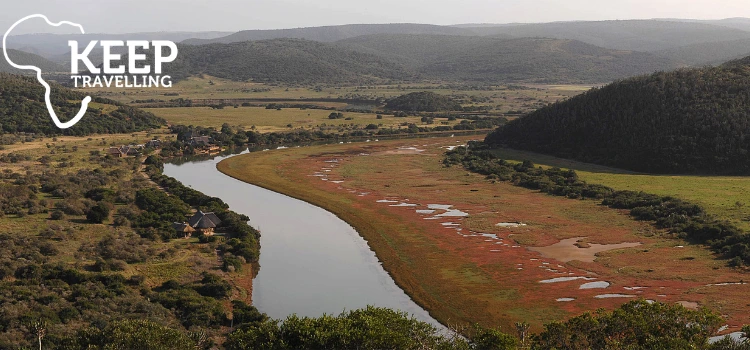
Two rivers, the Kariega River and Bushman’s River, flow through the property, while the beaches around Kenton-on-Sea remain close enough to become part of the experience. It creates an unusual combination: proper safari country with a strong river and coastal element.
Five Lodges for Five Different Travellers
Kariega covers approximately 12,000 hectares, so the reserve is large enough for its five lodges to feel separate from one another. More importantly, Lindy explains that they were developed for quite different types of guests. That gives travellers a choice beyond simply deciding which room looks best.
Main Lodge: Families and Social Travellers
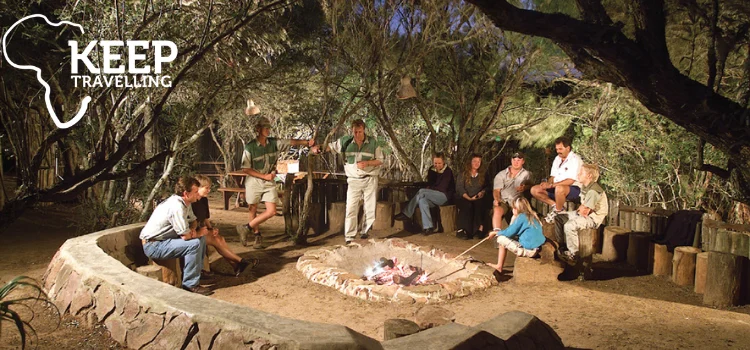
Main Lodge is Kariega’s lively, family-friendly option. It has 24 chalets in one-, two- and three-bedroom configurations and accommodates individuals, families and larger groups.
There is also a naturally sociable atmosphere. Lindy describes walking into the lodge and seeing groups of guests sitting together, only to discover they had arrived separately and met during their stay. For families, Main Lodge also has Kariega’s Kids on Safari programme, which gives younger travellers something more meaningful than simply following the adults around.
Ukhozi Lodge: Romance and Intimacy
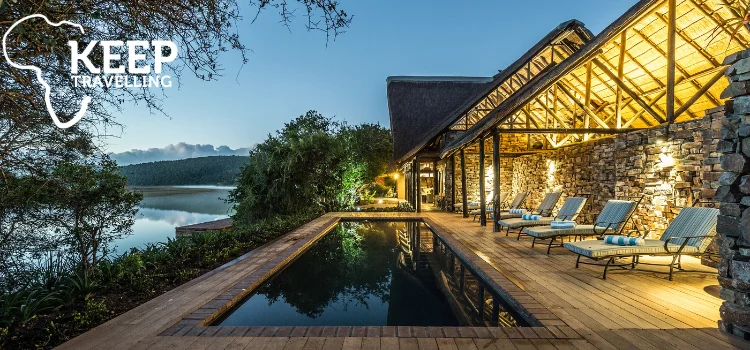
Ukhozi Lodge is smaller, with only ten suites. Its atmosphere is more intimate and romantic, making it especially well suited to couples, honeymooners and smaller groups of friends. Each suite has a private plunge pool, while the lodge itself offers plenty of quieter spaces to retreat into.
Lindy describes it as giving guests a very luxurious feeling while remaining within Kariega’s four-star superior category. Children under ten are not accepted at Ukhozi, helping maintain that quieter atmosphere.
River Lodge: For Guests Who Want to Be Active
River Lodge also has ten suites, but the experience is quite different. Everything revolves around the Bushman’s River. In addition to morning and afternoon game drives, guests can canoe, fish and take a daily boat excursion downriver towards Kenton-on-Sea.
The boat journey takes around twenty minutes, after which guests can enjoy the beach, swim, walk along the coast and spend some time away from the traditional safari routine. Lindy calls River Lodge ideal for the more active safari traveller. It is easy to understand why.
A day does not have to revolve entirely around waiting for the next game drive. There are other ways to explore the environment.
Settlers Drift: Remote Five-Star Safari
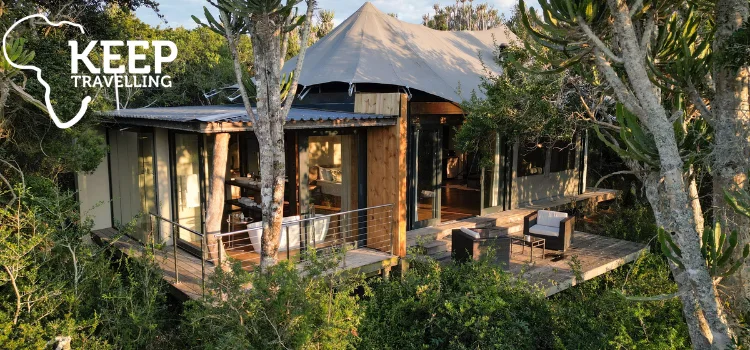
Settlers Drift sits in the northern section of Kariega on the upper reaches of the Bushman’s River. There are only nine large tented suites, and Lindy describes a feeling of complete remoteness, with little light pollution or indication of civilisation around you.
Here, the emphasis moves towards five-star service, fine dining and a more secluded safari experience. For well-travelled guests looking for something quieter and more refined, Settlers Drift offers the top end of the Kariega experience.
The Homestead: Your Own Safari Villa
The Homestead is different again. It is an old farmhouse converted into a private villa with seven en-suite rooms, a large garden, private boma and swimming pool.
There is a family history to the building too. Lindy explains that their children grew up there, giving the property a genuine home-from-home feeling. For multi-generational families or groups travelling together, this allows far greater flexibility and privacy than a conventional lodge stay.
Food Is Part of the Experience
As with most good safari stays, meals become an important part of the daily rhythm. Lindy jokes that after arriving at Kariega and having the first meal, guests are unlikely to feel hungry again.
At Main Lodge, the style is more buffet based, which suits the larger and family-focused nature of the property. Ukhozi Lodge, River Lodge and Settlers Drift offer à la carte dining, with breakfast typically combining a continental spread with cooked options.
Dietary requirements are catered for, while evening meals include a variety of meat, fish, chicken and vegetarian choices. At Settlers Drift, the dining moves into a more formal five-star experience, with the chef discussing the evening menu with guests.
Lindy also highlights something that cannot be measured on a menu: the warmth of the people. She describes Eastern Cape hospitality as naturally friendly, and that human element forms an important part of the lodge experience.
A Kariega Game Reserve Safari Is About More Than Wildlife
When Rael asks Lindy about game viewing, her answer does not immediately begin with lions, elephants or rhinos. Instead, she talks about biodiversity. This turns out to be one of the most interesting parts of the conversation.
Kariega sits within an area where two important biodiversity regions meet. The Cape Floristic Kingdom extends eastwards from the Cape region, bringing plants such as proteas, ericas and fynbos. Meanwhile, the Maputaland-Pondoland-Albany region runs down the coastline from Mozambique. The result is an exceptionally varied landscape.
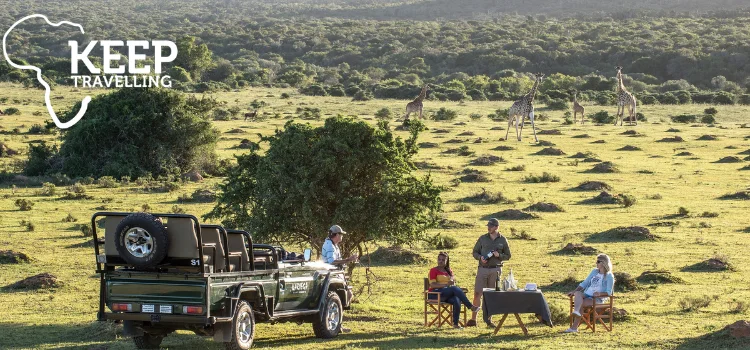
Kariega has seven different biomes, ranging from rugged mountains and flood plains to riverine forest, grasslands and Albany thicket. That variety means the scenery can change significantly as guests move around the reserve. One moment may feel open and expansive. Another may be enclosed by thick vegetation or river valleys. And then the wildlife is added to it.
Big Five Game Viewing in a Changing Landscape
Kariega offers Big Five game viewing, but Lindy believes the setting adds something important to every sighting. She describes situations where guests may be watching elephant and lion before a cheetah unexpectedly walks past.
At other times, a herd of elephants might gather in a valley surrounded by hills and mountains. Those moments illustrate why safari cannot simply be measured by how many animals appear on a checklist. The landscape matters. The behaviour matters. The guide matters. And often the completely unexpected moment is the one that stays with you.
For travellers choosing an Eastern Cape safari, Kariega’s combination of wildlife and changing habitat gives game viewing a different feel from reserves where the landscape remains more consistent.
The Smaller Things Matter Too
Rael raises a subject close to his own way of experiencing safari: looking beyond the Big Five. Most first-time safari travellers naturally want to see lion, leopard, elephant, rhino and buffalo. There is nothing wrong with that.
However, Lindy points out that biodiversity includes far more than the largest mammals. It includes birds, plants, insects, amphibians and species that most guests may never previously have heard of. Kariega has more than 1,250 species recorded across the reserve. Some carry protected status, while others are endangered or critically endangered.
One example is the estuarine pipefish, which lives and breeds in the Kariega and Bushman’s Rivers. Most safari guests are unlikely to see one. Yet its existence says something important about the health and complexity of the wider ecosystem.
Lindy makes a particularly good point during the discussion: the big animals create unforgettable first impressions, but it is often the smaller things that bring people back to the bush.

Exploring Kariega on Foot
One of the best ways to notice those smaller details is by walking. Guests can arrange guided walks with their field guide after breakfast, allowing them to return to the reserve at a completely different pace. Walking changes safari.
In a vehicle, the natural instinct is to cover ground and search for larger animals. On foot, suddenly tracks, plants, insects and bird calls become more important. The experience becomes less about how much you can see and more about understanding what is directly around you.
Rael mentions during the podcast that he personally prefers walking because it opens up a side of the bush that can easily be missed from the back of a vehicle. For travellers who feel the same, this adds another dimension to a Kariega Game Reserve safari.
A Safari Experience Designed for Children
Family safari planning brings its own challenges. A six-year-old may not share an adult’s enthusiasm for sitting quietly in a safari vehicle for several hours. That is why Kariega’s Kids on Safari programme at Main Lodge is particularly useful.
Children have both an indoor activity area and an outdoor eco-trail. During their stay, they work towards becoming junior field guides, completing activities before receiving a certificate at the end.
Activities include learning about tracks and spoor, exploring trails, birding and outdoor games. For very young children who cannot join certain game drives, babysitting is available. Lindy suggests the programme generally works particularly well for children between around three and twelve, although naturally every child is different.
The important thing is that children are not simply passengers on their parents’ safari. They get their own experience of the bush.
Why Staying Longer Can Make Sense
Many South African itineraries include only two or three nights on safari. At Kariega, there is a good argument for staying longer. The east and west of the reserve are quite different, with the Kariega River influencing one side and the Bushman’s River the other.
Because 12,000 hectares is a substantial area, Lindy recommends considering combinations such as two nights in the east followed by two or three nights in the west. Four or five nights therefore allow guests to experience different parts of the reserve without rushing.
It also makes it possible to combine lodge styles. A stay incorporating River Lodge introduces the coastal and river activities. Combining another lodge with Settlers Drift adds the remote five-star element.
The point is not simply to add nights. It is to use them to create different experiences within the same reserve.

Conservation and the Kariega Foundation
Kariega’s story extends beyond tourism. The Kariega Foundation works alongside the commercial reserve in conservation and community development. Lindy describes the two organisations as separate entities but connected by the same overall vision: protecting the biodiverse landscape while supporting the communities around it.
The foundation works with four neighbouring communities and employs more than 50 people. Guests staying longer can also take part in a community immersion experience.
This includes visiting a local primary school, learning more about Xhosa culture and community life, visiting a library and computer hub, and spending time with older women involved in local craft projects.
What is important is that the activity is not presented simply as stopping at a market. Guests can engage, learn and take part before deciding whether they would like to purchase anything. It gives visitors another way of understanding the place they have travelled to.
From Family Farmland to Kariega Game Reserve
The family history behind Kariega is equally interesting. Lindy is part of the second generation. Her father was a lawyer with an interest in property, while her mother was a conservationist. During the late 1980s, her father was approached about a farm on the Kariega River.
At the time, much of the Eastern Cape was farmland, and safari tourism in the region looked very different from today. The original development was not intended to become the international game reserve travellers now know.
Her father developed holiday homes and created what was then called Kariega Park, where South Africans could stay in self-catering accommodation, walk and cycle amongst local game. During the following decade, ecotourism began developing across the Eastern Cape.
Kariega expanded too, growing from a relatively small property into a larger reserve with river frontage and, eventually, the confidence to enter the international safari market. Today, that original idea has developed into a 12,000-hectare reserve with five lodges, wildlife conservation, community programmes and a very different landscape from the farmland that dominated the region decades ago.
Is Kariega Right for Your South African Journey?
There is no safari property that suits every traveller. That is why matching the experience to the person matters. Kariega works particularly well for travellers already visiting Cape Town and travelling the Garden Route.
Families have Main Lodge and Kids on Safari. Couples can choose something more intimate at Ukhozi. Active guests may prefer River Lodge. Those wanting secluded five-star luxury have Settlers Drift.
Private groups and multi-generational families have The Homestead. Beyond the accommodation, however, the reserve’s biggest strength may be the combination of experiences. Big Five game viewing is only one part of it.
There are rivers, walking safaris, birdlife, smaller species, changing landscapes, family history, conservation, community projects and even the possibility of adding beach time to the safari. That is what makes a Kariega Game Reserve safari particularly interesting.
You may arrive wanting to see an elephant or a lion. But, as Lindy’s conversation with Rael makes clear, you can leave remembering far more than the animals alone.
A few years from now, you will not remember how much it cost you, but you will always remember the memories you made. Keep Travelling.