If you are looking for an African destination that still feels genuinely remote, Epupa Falls Namibia deserves a place on your radar. Set on the Kunene River in the far north of the country, close to the Angolan border, this is a part of Namibia that feels very different from the classic safari routes. In this episode of Keep Travelling: Your African Story, I speak with Deane Spall from Epupa Camp about the journey north, life beside the river, the people of the region, and why Northern Namibia travel can be so rewarding for visitors who want to go beyond the obvious.

A Journey Into Namibia’s Far North
One of the first things Deane explains is just how remote Epupa really is. Most international visitors arrive in Namibia through Windhoek, while some begin farther south after travelling from South Africa. From there, the journey usually continues north by road, often via Etosha or through the traditional Kaokoland region.
The final major town before Epupa is Opuwo. Up to that point, travellers can follow tarred roads. After Opuwo, however, the character of the journey changes. The last stretch is around 180 kilometres on gravel and takes roughly three hours because of the road conditions, drifts, climbs and descents. As Deane puts it, the farther north you go, the more remote it feels, almost as if you are travelling back in time.
Deane also notes that tourism links with Angola are beginning to develop. Local communities cross the border regularly because families and cultural ties extend across both sides of the Kunene River. Tourist movement is still limited, but the potential for stronger regional travel is clearly growing.
From Accounting to Epupa Camp
Deane’s own journey to Epupa Camp is as unexpected as the destination itself. He originally studied finance and accounting with the intention of becoming a chartered accountant. However, he quickly realised that this was not the long-term path for him.
After university, the father of a school friend, who owned the lodge at Epupa, asked him to help with a managerial transition. The plan was simple: go north for a month or two and assist while a manager retired. Instead, those one or two months became two years of living full-time at Epupa Camp.
That experience stayed with him. He describes it as one of the best things he could have done and says the place remained special to him long after those first years. Since then, he has become more involved on a head-office level, especially in sales and marketing, while continuing his connection to Epupa and the wider operation.
What Staying at Epupa Camp Is Really Like
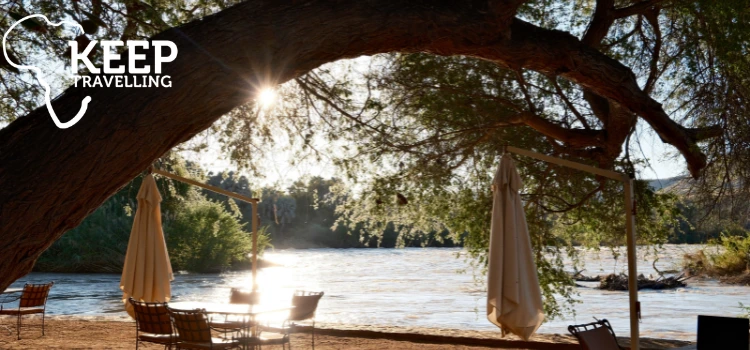
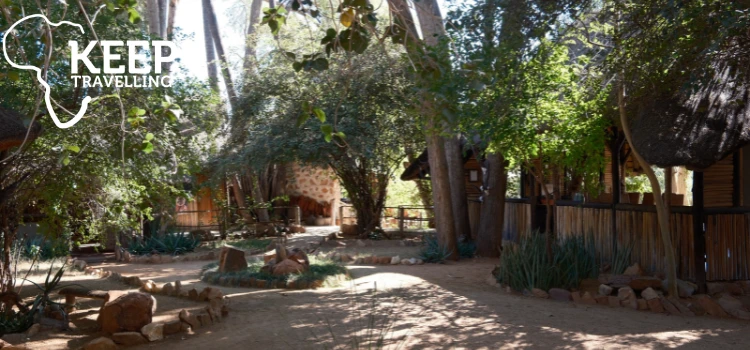
Epupa Camp is completely off-grid. Power comes from solar and battery systems, and Deane describes the property as rustic rather than overly polished. That does not mean uncomfortable. Instead, the camp is designed to sit naturally within its surroundings. The tented rooms face the Kunene River, so guests can see the water from where they sit or sleep. The sound of the river also becomes part of the experience, especially at night. Each room has an en suite bathroom, and the camp offers a range of accommodation, including twin rooms, a honeymoon room, a family room and a more luxurious cottage.
The cottage is the premium option. With its thatched style and greater level of comfort, it suits honeymooners and guests staying for a longer period. What stands out is the sense of place. At Epupa Camp, the river is not simply something you visit during an excursion. It is part of the daily rhythm of the stay. The view, the sounds, the climate and the feeling of remoteness all form part of the experience.
For travellers considering Northern Namibia travel, that distinction matters. Epupa Camp is not trying to imitate a luxury safari lodge in a private reserve. Its appeal is different. It is intimate, remote, owner-managed in character and closely tied to the landscape around it.
Food, Drinks and the Importance of Planning Ahead
The food at Epupa Camp reflects the same straightforward, welcoming style. Breakfast is generally served as a buffet, while dinner is described as homely rather than formal or pretentious. Deane explains that this is deliberate. The camp is not trying to create a fine-dining identity. Instead, the food and beverage offering matches the relaxed, owner-managed atmosphere.
Local options feature on the menu and drinks list. Although Namibia is not internationally famous for wine, local wines are available alongside better-known South African wines, especially those from the Western Cape. One of Deane’s recommendations for first-time visitors is a rock shandy, a drink well known across Southern Africa and particularly refreshing in a hot climate.
Dietary requirements can also be accommodated, provided the camp knows in advance. Deane mentions that they have catered for requests as specific as gluten-free vegan diets. Because Epupa is so remote, however, planning is essential. Supplies are not available around the corner, so advance notice allows the team to prepare properly.
That is a useful lesson for anyone planning a stay in this part of Namibia. Remote travel rewards preparation. The more information your hosts have before you arrive, the better they can look after you.

Experiences That Go Beyond the Camp
One of the strongest themes in our conversation is that modern travellers increasingly want to do more than simply stay somewhere beautiful. They want experiences. At Epupa Camp, one of the most important activities is a guided visit to a Himba village. Guests travel with a guide who also acts as a translator, and the aim is to experience the living reality of the Himba people.
Deane is very clear about the approach. These are not staged “living museums”. They are real villages where people are going about their daily lives. Permission is requested before guests enter, even when a visit has been arranged in advance. That sensitivity matters. The experience is not intended to reduce culture to entertainment. Instead, it becomes an exchange. Visitors learn about Himba traditions, history and everyday life, while local people are often equally curious about the lives of the travellers who have come to meet them.
Rafting is another popular activity. Guests travel around seven kilometres upstream before starting a gentle rafting experience on the Kunene River. This is not extreme white-water rafting. Deane says it is suitable for a wide age range and mentions that someone in their mid-eighties has completed it. The river journey provides a completely different view of the landscape. Birdlife is an important part of the experience, and crocodiles can also be seen along the river. Deane says the guides are experienced in navigating the area safely and that the camp has operated rafting trips for many years without a crocodile incident.
Then there is the sundowner experience at Epupa Falls itself. Guests visit the falls with a guide before heading to a viewpoint on a hill above the area. From there, they can see the wider spread of the falls while enjoying a drink and something to eat as the sun goes down.
Understanding Epupa Falls
The Kunene River begins in the highlands of Angola before flowing south towards Namibia. When it reaches Ruacana, it passes through an important hydropower area that supplies energy to the Namibian grid and also influences the flow of the river. The river has seasonal changes, with higher water levels generally from January through April. During this period, local rain and higher river flow can combine to create flooding.
From around June to November, which is an important tourism season in the area, the river is generally lower and steadier. However, the falls continue to flow year-round. The main fall has a drop of around 30 metres. Deane explains that the name “Epupa” refers to the mist created by the falls, which appears as a constant plume above the water.
What makes the landscape especially impressive is the width of the falls. Rather than one narrow drop, the river spreads across a much broader area, with smaller channels and cascades extending across roughly two kilometres. From the elevated sundowner viewpoint, visitors can appreciate the full sweep of the landscape.
This helps explain why Epupa Falls Namibia is so visually distinctive. It is not simply the height of the waterfall that creates the impact. It is the combination of river, rock, channels, mist and arid surroundings.

Wildlife, Conservation and Communal Land
Epupa is not a traditional big-game destination, and Deane is refreshingly honest about that. Visitors may see birds, crocodiles, impala and kudu, but the region is not currently known for large concentrations of wildlife. Historically, there were more elephant, rhino and other large animals. However, conflict and the liberation struggle had a major impact on wildlife populations in the area.
Today, Epupa Camp works closely with the local conservancy. The camp operates on communal land rather than private property, which means local communities are directly connected to the land and the tourism activity taking place there. Deane describes the relationship as a partnership. There are plans to reintroduce giraffe to the area, with the hope that wildlife recovery can continue gradually over time.
The People, Languages and Cultures of Namibia
When I ask Deane what might surprise international visitors about Namibian people, his first answer is their friendliness. He describes Namibians as open, hospitable and curious about visitors. The culture is generally relaxed, which can feel quite different for travellers accustomed to more formal service environments.
English is widely spoken, making communication relatively easy for international guests. At the same time, Namibia is linguistically diverse. Deane mentions English, Afrikaans, Oshivambu, Damara, Herero and Nama among the main language groups, with many additional dialects.
Culturally, the country is just as varied. Northern Namibia is especially interesting because of the continued presence of strong traditional identities, including the Himba people, who are closely related to the Herero. For many visitors, these cultural encounters become as important as the landscapes themselves.

Why Choose Epupa?
The strongest reason to visit Epupa is also the simplest: it is off the beaten track. Deane believes there is a particular type of traveller who wants to go beyond the established route. Namibia’s deserts, Etosha and the better-known northeastern regions all have enormous appeal, but the northwest offers something different. It feels less explored.
For travellers who have already visited Namibia once, that can be especially attractive. Deane says many guests at Epupa Camp are returning visitors to the country. They have already completed the classic route and now want to discover somewhere new. That is perhaps the best way to understand the appeal of Northern Namibia travel. It is not necessarily where everyone should begin. However, for someone who has already fallen in love with Namibia, or for a first-time visitor who values remote landscapes and cultural depth, it can become one of the most memorable parts of the trip.
One guest has apparently returned to Epupa Camp around 15 times over roughly 25 years. That level of loyalty says a great deal about the emotional pull of the place. Deane also notes that Epupa Camp is approaching its thirtieth anniversary. Over that period, the camp has grown and changed, yet the essential appeal seems to have remained consistent: a distinctive, authentic setting in a part of Namibia that still feels genuinely remote.
What to Pack for Northern Namibia
When I ask Deane what travellers should pack, his advice is practical. First, take sunscreen. The sunlight can be intense, so proper protection matters. Second, pack a good pair of walking shoes. Northern Namibia rewards travellers who are comfortable exploring on foot, whether around the camp, near the falls or during other activities. Third, take binoculars. They are useful for birding, wildlife and simply appreciating the scale of the landscape.
Who Is Epupa Best Suited To?
Epupa will appeal most strongly to travellers who value character over convenience. It suits people who enjoy road journeys, landscapes, cultural encounters and destinations that require a little more effort. It can also work particularly well as part of a broader Namibia itinerary. A first journey might combine Etosha, the desert regions and other classic highlights before continuing north. Alternatively, repeat visitors can use Epupa as a reason to discover a part of the country they did not reach the first time.
The key is expectation. Epupa is not primarily a big-game safari destination, nor is it a glossy resort. Instead, its strengths lie in the river, the falls, the remoteness, the communities and the feeling of being somewhere that still sits outside the mainstream tourist circuit.
Is Epupa Right for You?
Epupa Falls Namibia is not a destination built around convenience. It takes time to reach, the roads become rougher, and the camp operates in a genuinely remote setting. That is exactly why it appeals to the right traveller. If you want polished city hotels, easy transfers and a tightly packaged resort experience, Epupa may not be the obvious choice. However, if you value a sense of discovery, authentic cultural interaction, dramatic scenery and the feeling that you have travelled somewhere most visitors never reach, then Epupa deserves serious consideration.
Epupa Camp gives you a base on the Kunene River from which to experience all of that. More importantly, it gives you access to a part of Namibia that feels deeply connected to its landscape and people. For me, that is what makes destinations like Epupa so compelling. Travel does not always have to be about ticking off the best-known attractions. Sometimes the most powerful experiences come from going farther, slowing down and allowing a place to reveal itself.
Planning Your Own Northern Namibia Journey
A trip to Epupa works best when it is planned as part of the wider journey rather than treated as an isolated stop. Driving distances, road conditions, accommodation availability and dietary requirements all matter more when you are travelling in remote regions. That is also where careful itinerary design becomes valuable. The question is not simply whether Epupa belongs on your Namibia trip. It is how to connect it naturally with the rest of your route, how much time to allow, and what kind of experience you want before and after reaching the Kunene River.
At Keep Travelling, that is exactly the kind of journey I enjoy putting together: privately planned African travel built around the person travelling, rather than forcing every traveller into the same itinerary.
If Northern Namibia travel appeals to you, Epupa could be one of those places that changes the character of your entire Namibia journey. It asks a little more of you in terms of time and distance, but in return it offers something increasingly valuable: the feeling that you have genuinely travelled somewhere.
Let me leave you with this: you won’t remember how much it cost you, but you’ll always remember the memories you made. Keep Travelling.