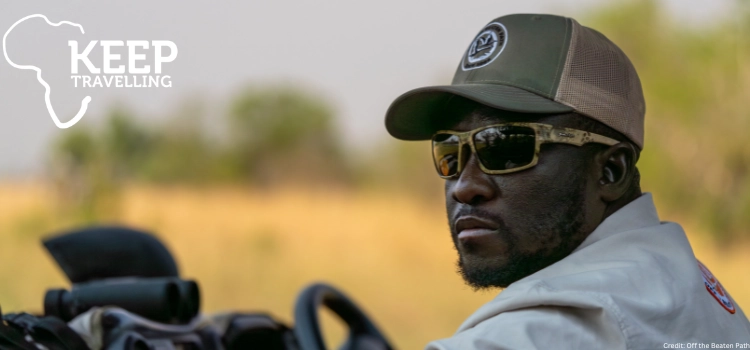
Botswana safari travel tips often focus on wildlife alone, yet the best journeys through this part of Africa are shaped by far more than sightings. In the latest episode of ‘Keep Travelling: Your African Story’, host Rael Zieve sat down with Cary Costello from Off the Beaten Path, and the conversation revealed something important. A truly memorable Botswana safari is not built only around lions, leopards and luxury camps. It is built around pace, place, variety, and the feeling of being drawn into the landscape properly. From Maun to the Okavango Delta and on to Victoria Falls, Botswana rewards travellers who want depth rather than hurry.
Why Botswana feels different from the moment you arrive
Some safari destinations announce themselves loudly. Botswana does not need to. It has a quieter confidence. The moment you arrive, there is a sense of space that begins to work on you. The roads feel longer, the skies feel broader, and the landscapes seem to ask you to slow down rather than rush forward. That alone is one of the most useful Botswana safari travel tips for first-time visitors. Do not arrive expecting a destination that performs for you instantly. Arrive ready to settle in and let the country unfold.
Maun is often the starting point, and it deserves more respect than it usually gets. For many travellers, it is seen only as a jump-off point into the bush. In truth, it plays an important role in how a safari begins. A good arrival in Maun gives you a softer landing into Botswana. It helps you shift out of airport mode and into safari mode. That transition matters more than people think. A rushed beginning can make the whole trip feel disjointed. By contrast, a well-paced start creates the right frame of mind for everything that follows.
This is why Botswana tends to suit travellers who want something more personal and less crowded. It does not rely on spectacle alone. Instead, it draws you in gradually. That can be felt in the transfer out of Maun, in the first drive into camp, and in those early moments when you realise the safari has already begun even though nobody is trying too hard to impress you. The setting does the work. The silence does the work. The distance from everyday life does the work.
Start with the landscape, not just the checklist
Many people travel to Africa with a mental checklist. They want the Big Five. They want a beautiful room. They want dramatic photos by sunset. All of that is understandable. However, Botswana tends to reward a different mindset. One of the strongest Botswana safari travel tips is to start by connecting with the landscape itself. Once that happens, the wildlife starts to feel less like a target and more like part of a wider story.
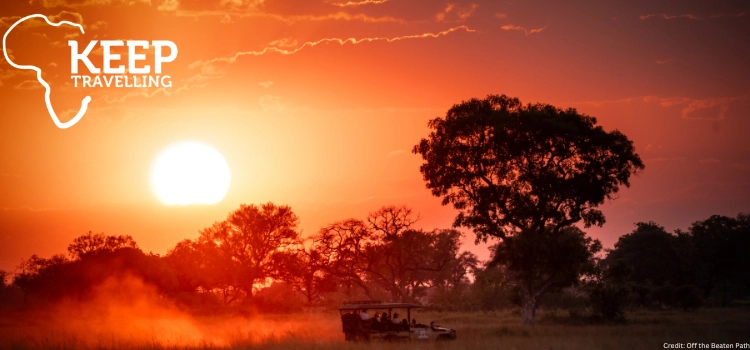
That is why a gentler first camp can be such a smart choice. A smaller concession near Maun can offer something incredibly valuable: ease. You are not chasing intensity on the first morning. You are learning how to look. That makes a real difference. It helps you notice texture, scale, and atmosphere. It also allows your senses to wake up properly. Suddenly the sounds matter. The shape of the bush matters. The light matters. Even the dust rising in the distance starts to mean something.
A safari becomes richer when the destination is allowed to introduce itself in that way. You stop measuring every hour by the animals you saw. Instead, you begin to appreciate how Botswana feels. That is the shift that separates a standard trip from one that stays with you. It is also why experienced safari planners understand that the opening chapter of an itinerary should do more than fill time. It should set tone.
Why walking safaris change everything
If there is one lesson that should sit near the top of any list of Botswana safari travel tips, it is this: do not build the entire journey around game drives alone. Game drives are central to safari, of course. They are exciting, varied and often unforgettable. Yet walking safaris bring a completely different energy, and that change of perspective can shape the whole trip.
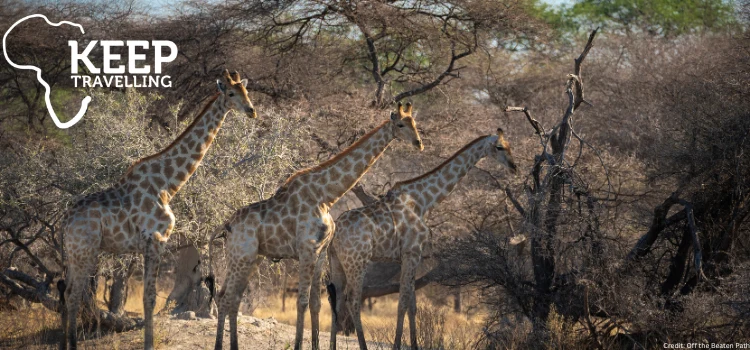
When you leave the vehicle and step into the bush on foot, the landscape stops feeling distant. It becomes immediate. A giraffe is no longer part of a wide view framed by a windscreen. It is an enormous, graceful animal sharing real space with you. A termite mound is no longer a passing feature. It becomes a towering structure full of life and purpose. The guides are no longer simply pointing into the distance. They are drawing your attention downward, outward and inward all at once.
This kind of safari experience is not about adrenaline alone. It is about connection. You notice more because you are moving differently. You listen more because silence becomes part of the experience. You also begin to understand how much of the bush can be missed when every sighting is approached at speed. Walking safaris ask you to engage with Botswana rather than consume it. That is a big difference.
For many travellers, this becomes one of the most memorable parts of the journey. It adds intimacy. It creates contrast. It also balances the rest of the itinerary beautifully. After all, a well-designed safari should not feel repetitive. If every day is built in exactly the same way, even wonderful settings can begin to blur. Walking safaris break that pattern and remind you that Botswana offers far more than one way of seeing.
The smaller details are often the most powerful
One of the easiest mistakes on safari is to focus only on the obvious. Lions, elephants and leopards deserve their fame, yet they are not the whole story. Botswana is full of smaller details that can be just as absorbing when you give them a chance. In fact, one of the best Botswana safari travel tips is to travel with wider curiosity. That means looking beyond the headline sightings and paying attention to the life that fills the spaces between them.
Birdlife is a perfect example. Many travellers do not arrive in Botswana thinking birding will matter much to them. Then, little by little, it starts to work its way into the experience. The colours are brighter than expected. The movement is sharper. The variety is surprising. Soon, a lilac-breasted roller or a bee-eater becomes part of the day’s excitement rather than a side note. That does not make the classic safari sightings less important. It simply makes the whole journey more layered.
The same can be said for the so-called little five, the insects, the reptiles, the tracks, and the structures built by tiny creatures across the bush. These things may not dominate marketing brochures, yet they bring real depth to a safari. They also remind travellers that Botswana is not only about individual animals. It is about systems, relationships and habitats. Once you begin to see that, the destination becomes far more interesting.
A good safari guide understands this perfectly. They know that a memorable drive is not only measured by what roars or charges. Sometimes the richest moments are quieter. Sometimes they come from a pause rather than a chase. For travellers willing to look closer, Botswana gives back again and again.
What luxury really means in Botswana
Luxury in Botswana is often misunderstood. Some people still picture safari luxury as a version of city-hotel luxury placed in the bush. Yet the reality is more interesting than that. In Botswana, luxury often comes from location first. It comes from being exactly where you should be, with the right guide, the right camp atmosphere, and the right access to the landscape around you.
That matters because it changes the way people judge a trip. A polished room is lovely, but it is not the thing that creates meaning. The true indulgence may be waking to a view over riverine bush, hearing wildlife beyond camp, or stepping out onto a bluff and seeing elephants below. It may be the fact that you are not spending half the day driving to and from the action because your camp is already embedded in it. Those are the things that make a Botswana safari feel rich.
This should be part of every serious conversation around Botswana safari travel tips. Choose camps for more than finishes and fittings. Ask what the setting offers. Ask how wildlife moves through the area. Ask what kind of activities are possible from that location. Ask how the guides shape the experience. Those questions usually tell you far more than the room category ever will.
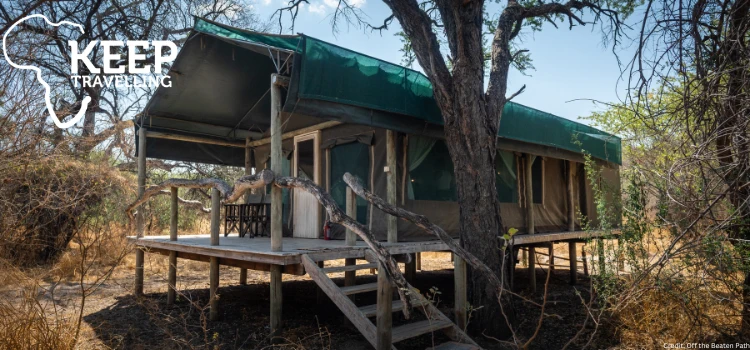
Of course, comfort still matters. Botswana does comfort extremely well. There are beautiful tents, thoughtful details, excellent food and warm service throughout many camps. Still, the magic lies in the fact that all of that is anchored in place. The luxury feels earned because it is paired with immersion rather than separation. You are comfortable, yet you are not cut off from the landscape. That balance is what makes Botswana so compelling.
Food, people and the emotional memory of a safari
A safari is never only about wildlife. The people hosting you shape the trip just as much as the animals do. This is especially true in Botswana, where warmth and generosity often become part of the story travellers carry home with them. A guide’s humour, a staff member’s kindness, the easy welcome at camp, these things matter. They give the journey emotional texture.
Food plays a role too. It is easy to overlook meals when talking about safari, yet they often become part of the rhythm that makes the experience feel whole. Early morning coffee before a drive, breakfast in camp, lunch in the shade, high tea before heading out again, dinner under the stars, all of this gives structure to the day. More importantly, it creates moments of pause. Those pauses matter. They give you time to absorb what you are seeing and feeling.
In Botswana, local influence can make that even stronger. When food reflects the place rather than feeling imported from somewhere else, the experience gains another layer of authenticity. It becomes part of the destination rather than a break from it. That is the sort of detail many high-end travellers now value deeply. They do not want luxury that feels generic. They want luxury with identity.
This is another reason Botswana stays with people. The memory is not just visual. It is social and sensory too. You remember the guide who made you laugh. You remember the campfire conversations. You remember how the staff made everything feel easy without ever making it feel artificial. In the long run, those details often remain just as vivid as the sightings themselves.
Why pacing matters more than people think
A strong safari itinerary is not only about where you go. It is also about how quickly you move. One of the smartest Botswana safari travel tips is to resist the temptation to change camps too often. Botswana is a destination that benefits from proper pacing. You need enough time in each place to settle into the rhythm of the day, learn the feel of the area, and stop living out of a bag.
That is especially true on an Okavango Delta safari. The Delta is not a destination best experienced in a rush. It has its own tempo, and that tempo is part of what makes it special. Early mornings, midday rest, evening drives, water-based activities, the shifting light over the channels, all of that works best when you let it repeat long enough to become familiar. By the third day in camp, safari often starts to feel natural rather than scheduled. That is when you begin to relax into it properly.
Moving too often interrupts that process. It may look efficient on paper, but in reality it can make the trip feel fragmented. Each transfer takes energy. Each new camp requires adjustment. If that happens too frequently, the safari risks becoming a series of arrivals rather than a continuous experience. Botswana deserves better than that.
A more thoughtful itinerary balances variety with stillness. It shifts between different environments, yes, but it also leaves enough room for each place to reveal itself. This is one reason the best safaris often feel so well judged. They do not show you everything. They show you enough, at the right pace.
Why the Okavango Delta safari changes the mood of a trip
There is something about an Okavango Delta safari that alters the emotional tone of a journey. Water changes everything. It softens the landscape, broadens the wildlife mix, and opens up new ways of exploring. Suddenly safari is not only about roads and tracks. It is also about channels, reeds, reflections and movement across water.
That shift matters because it creates contrast. After drier landscapes, the Delta can feel like a new chapter. It offers mokoro trips, quieter birding moments, and different perspectives on the bush. Wildlife is still central, of course, but the setting changes the texture of the experience. It becomes more fluid and, in some ways, more atmospheric.
The Delta also underlines why Botswana works so well as a multi-camp destination. Different areas of the country deliver different rewards. A drier concession may offer one mood, while the Delta offers another. One camp may be stronger for big cats, another for water-based activities, another for birdlife, another for sheer scenery. When these elements are combined well, the itinerary starts to feel wonderfully complete.
For travellers planning their first Okavango Delta safari, this is worth remembering. Do not think only in terms of tick-box highlights. Think about contrast. Think about the emotional journey. Think about how each part of the itinerary can deepen the one before it.
Safety, comfort and first-time worries
Many first-time visitors to Africa quietly carry the same questions. Is safari safe? What about malaria? Will I feel out of my depth? Those concerns are understandable. Still, Botswana tends to answer them through experience rather than argument. Once travellers arrive and see how calmly and professionally the camps operate, much of the anxiety falls away.
Guides know the terrain. Camps understand how to host people in wild settings. Vehicles are handled with great care. Activities are structured properly. That does not remove the sense of adventure, but it does make the experience feel reassuringly well managed. In many cases, guests leave Botswana wondering why they worried quite so much beforehand.
This matters because fear can distort planning. It can push people toward safer-sounding but less rewarding choices. A better approach is to prepare properly, ask sensible questions, and then trust the people on the ground. Botswana has earned its reputation as one of Africa’s premier safari destinations for good reason. The professionalism behind the scenes is part of that story.
Why Victoria Falls makes such a strong ending
The final section of a Botswana journey often raises a practical question. Should you add Victoria Falls or leave it for another time? In many cases, the answer is simple. Yes, add it. One of the most useful Victoria Falls travel tips is to understand how naturally it can fit onto the end of a Botswana itinerary, especially when coming out of the northern safari regions.
That matters because endings shape memory. Victoria Falls brings a different kind of energy. After the softer rhythms of the bush, there is more movement, more activity and more choice. That contrast can work beautifully. It makes the end of the trip feel expansive rather than repetitive. You still have nature at the centre of the experience, but now it appears through a different lens.
Good Victoria Falls travel tips should also make clear that the destination is more than a single viewpoint. The falls themselves are extraordinary, yet the wider area offers river experiences, cultural encounters, scenic dining, helicopter trips, adventure activities and time to simply absorb the atmosphere. Travellers who treat it as only a quick photo stop often miss its wider appeal.
As a safari ending, though, Victoria Falls really shines. It gives people a sense of culmination. The trip feels like it has broadened out into something bigger. You move from the intimacy of camp life into one of Africa’s most iconic natural settings, and that creates a memorable closing chapter.
The best Botswana journeys are built on variety
Taken as a whole, the strongest message here is simple. Botswana works best when the journey is varied, well paced and grounded in place. That means starting gently, mixing activities, allowing time in each camp, balancing dry and watery landscapes, and ending well. It also means travelling with curiosity rather than obsession. The richest safaris are rarely the ones built only around famous sightings.
That is why these Botswana safari travel tips matter. They point beyond the obvious. They suggest a safari that is fuller, calmer and more rewarding. They remind travellers that Botswana is not only beautiful. It is thoughtful. It gives you space to see, space to feel, and space to remember.
From Maun to the Okavango Delta safari experience and on to the practical value of Victoria Falls travel tips, this part of Africa offers something very special. It does not just give you wildlife. It gives you perspective. And that is often the thing people are really searching for, whether they realise it or not.
A few years from now, you will not remember how much it cost you, but you will always remember the memories you made. Keep Travelling.